
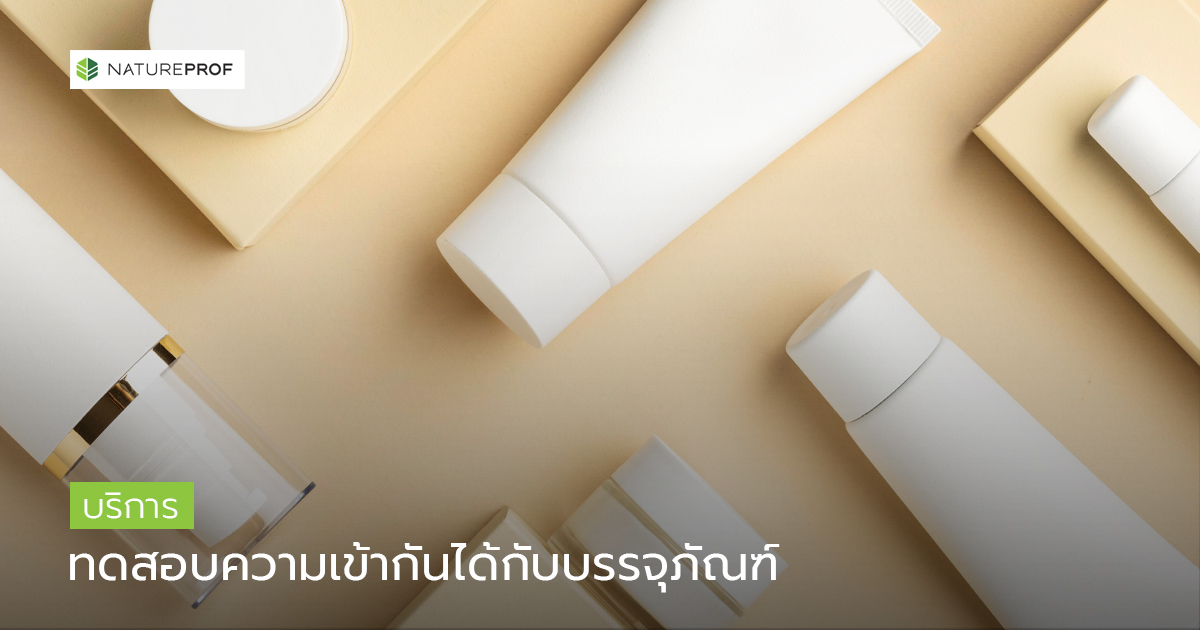
A good formula must go with the right packaging : test compatibility before going into full-scale production
In the skincare industry, the success of a product does not depend only on having “a good formula,” but also on the “compatibility between the formula and the packaging.” Packaging does more than simply contain the product. It must also protect, preserve quality, and communicate the brand image throughout the product’s shelf life.
Packaging Compatibility Testing is therefore a critical process that confirms whether your skincare formula can coexist with the packaging safely, without degradation, without unwanted chemical reactions, and while maintaining the efficacy of active ingredients throughout the entire period of use.
At NatureProf, we specialize in scientific testing to verify the quality and safety of health and beauty products. Our Packaging Compatibility Testing service is designed specifically for all types of skincare products, from serums, moisturising creams, and lotions to sunscreens, so that you can be confident that products launched to market will be stable and highly reliable.
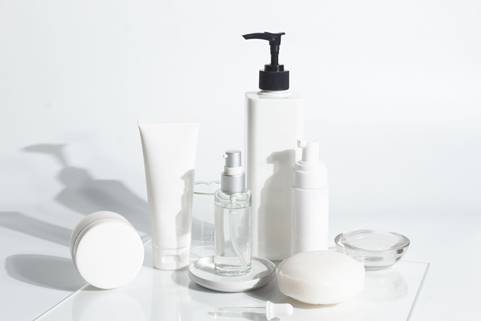
Image name : Packaging Compatibility Testing Service for Skincare Products by NatureProf Factory
The importance of packaging compatibility in skincare
Most skincare products contain active ingredients that are sensitive to temperature, light, and pH, such as vitamin C, retinol, hyaluronic acid, or natural extracts. These ingredients may react with the packaging material if the product has not been tested appropriately.
Common issues include:
● Changes in colour, odour, or viscosity of the product after long-term storage
● Active ingredients migrating into or being adsorbed onto the surface of the packaging material, resulting in lowered active concentration
● Cracking, swelling, or discolouration of the packaging material due to contact with the product
● Migration of metals or chemicals from the packaging into the formulation, affecting safety
Packaging Compatibility Testing is therefore an essential tool to reduce quality risks and post-marketing complaints, and to increase confidence among partners, investors, and regulatory authorities such as the Thai FDA or under the EU Cosmetic Regulation.
Principles of Packaging Compatibility Testing
The core principle of this testing is to simulate actual storage and usage conditions of the product, and to assess changes in both the “formula” and the “packaging material” over time under various conditions such as high temperatures, light, humidity, and temperature cycling.
This testing helps answer the following key questions:
- Does the skincare formula undergo any chemical reaction with the packaging material?
- Is there any migration or diffusion of substances between the product and the packaging material?
- Does the packaging maintain its protective performance against light, air, and moisture?
- Is the actual use of the packaging still convenient and safe throughout the product’s shelf life?
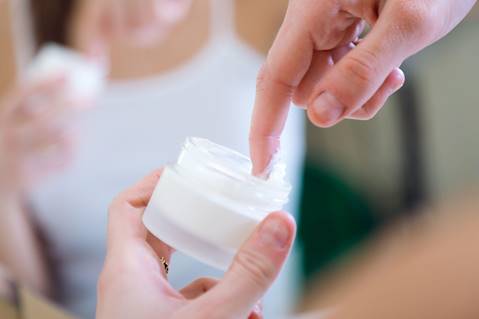
Image name : Packaging Compatibility Testing Service for Skincare Products by NatureProf Factory
Types of tests provided by NatureProf
1. Physical Compatibility Test (physical assessment)
To evaluate visually observable changes in both the formula and the container, including:
● Changes in colour, odour, and texture
● Leakage, collapse, or cracking of the packaging
● Deformation of pumps, tubes, or droppers
● Build-up of cream around the cap or bottle mouth
2. Chemical Compatibility Test (chemical assessment)
To analyse whether any reaction occurs between the formula and the packaging material, including:
● Measurement of pH and viscosity
● Determination of active ingredient content using HPLC (High-Performance Liquid Chromatography)
● Migration testing of substances from the packaging into the formula, such as heavy metals or substances from printing inks
3. Functional Test (usability assessment)
To simulate real consumer use, such as:
● Pump actuation and repeated opening and closing of caps
● Squeezing tubes under hot or cold conditions
● Spraying at different angles and pressures
Testing conditions used for evaluation
To reflect real-world conditions, NatureProf uses standard simulated conditions as follows:
|
Storage condition |
Details |
Typical duration |
|
Room Temperature |
25 ± 2 °C / 60 ± 5% RH |
0–12 months |
|
Accelerated Condition |
40 ± 2 °C / 75 ± 5% RH |
0–6 months |
|
Low Temperature |
4 ± 2 °C |
0–6 months |
|
Freeze–Thaw Cycle |
Alternating between 5 °C and 45 °C, at least 6 cycles |
– |
|
Light Exposure Test |
Using a xenon arc lamp to simulate sunlight and indoor light |
0–3 months |
Key parameters measured
1. Appearance – colour, odour, texture, and phase separation
2. pH – measured with a pH meter to evaluate changes in acidity/alkalinity
3. Viscosity – measured with a viscometer to evaluate texture
4. Leakage or cracking of packaging – checked using pressure and drop-impact tests
5. Migration Test – determination of chemical migration from the packaging material into the formula using GC–MS (Gas Chromatography–Mass Spectrometry)
6. Active Stability Test – measurement of active ingredient content using HPLC to evaluate the persistence of key actives
7. Microbial Limit Test – assessment of microbial contamination in accordance with ISO 17516:2014
Evaluation and acceptance criteria
Test results are assessed against quality criteria, which are generally considered in three main aspects:
|
Category |
Acceptance criteria |
|
Physical |
No change in colour, odour, or texture. Packaging shows no deformation or leakage. |
|
Chemical |
pH and viscosity changes do not exceed ±10% from initial values. Remaining active ingredient content is at least 90%. |
|
Microbiological |
No detection of pathogenic microorganisms (P. aeruginosa, S. aureus, C. albicans). TAMC/TYMC values do not exceed the limits specified in ISO 17516. |
NatureProf provides the results in the form of a Scientific Summary Report, including comparative photographs, graphs showing changes over time, and technical recommendations so that manufacturers can use the results to support real decision-making.
Benefits that brands gain from Packaging Compatibility Testing
1. Confirm product quality and safety before market launch.
2. Reduce the risk of customer complaints or product returns due to packaging-related degradation.
3. Enhance the scientific credibility of the brand by using test data in marketing communication or in regulatory submissions to the Thai FDA.
4. Support export market expansion, since NatureProf reports follow the ASEAN Cosmetic Directive and EU Regulation frameworks.
5. Help business owners select appropriate packaging materials in terms of technical performance, cost, and brand image.
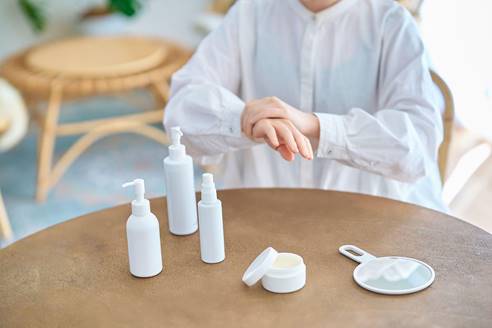
Image name : Packaging Compatibility Testing Service for Skincare Products by NatureProf Factory
NatureProf’s expertise in Packaging Compatibility Testing
NatureProf is a specialist in testing the quality and safety of health and beauty products, particularly in skincare. Our team includes chemists and cosmetic technologists who understand both formulation and packaging technology, and who closely coordinate information between the client’s R&D department and packaging design team.
We do not see this testing merely as “inspection,” but as Product Technology Management, enabling clients to use scientific data to improve formulations, select materials, and sustainably increase brand value.
Packaging Compatibility Testing is a key step that links a high-performance skincare formula to safe and aesthetically pleasing packaging. NatureProf’s service helps you ensure that your product maintains its quality, safety, and brand image throughout its storage life.
Let the expert team at NatureProf (OEM factory, ODM factory) verify and confirm the compatibility between your skincare formula and its packaging. We are ready to provide consultation, design a testing program, and prepare scientific reports that comply with international standards.
NatureProf – the testing standard trusted by leading brands
Because every kind of beauty begins with quality that can be proven by science.