
A great formula is not enough – it must remain truly stable throughout the entire shelf life
In today’s highly competitive skincare industry, having a standout formula alone is no longer sufficient. What truly earns the trust of consumers, investors, and international partners is the assurance that the product maintains consistent quality and safety throughout its entire storage period.
“Stability testing” is therefore a critical step used to confirm that your skincare product can continuously maintain its original properties, whether stored in hot, cold, or even intense sunlight conditions. Having stability test results serves as an objective proof of quality that reflects the professionalism of your brand and helps build confidence among consumers and investors at every level.
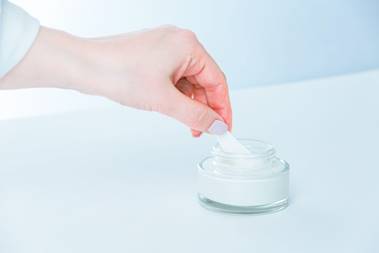
Image name : Stability Testing Service for Skincare Products with NatureProf
6 standard conditions for stability testing
1. Room Temperature Storage
This condition simulates normal daily storage, such as keeping the product in a room or on a regular shelf, using a temperature of approximately 25 degrees Celsius and around 60 percent relative humidity. The testing period typically ranges from 3 months to 12 months in order to observe changes in colour, odour, texture, phase separation, pH, viscosity, and microbial contamination.
2. High Temperature Accelerated
This condition simulates storage under high-heat stress, such as transportation in a car parked under direct sunlight or storage in a warehouse without air conditioning. The product is stored at approximately 40 degrees Celsius and 75 percent relative humidity for a period of 6 months to accelerate formula degradation and rapidly assess potential changes.
3. Low Temperature Storage
This condition is suitable for products that may need to be stored at low temperatures, such as certain serums or masks. The product is tested at 4 degrees Celsius to determine whether crystallisation or phase separation occurs. The ability to maintain texture and the stability of active ingredients are key criteria for evaluation.
4. Temperature Cycling or Freeze–Thaw
This condition simulates temperature fluctuations during transportation, such as moving from a regular warehouse to a hot or cold environment. In this test, the product is stored at a high temperature of 45 degrees Celsius for 24 hours, then moved to a low temperature of 5 degrees Celsius for another 24 hours – this counts as one cycle. The process is repeated for at least 3 to 6 cycles to evaluate the stability of the emulsion structure and the ability of the product texture to return to its normal state.
5. Direct Sunlight Exposure
This condition uses natural sunlight or a Xenon Arc Lamp to simulate UV–Visible radiation that the product may encounter in real life. It is suitable for products containing photosensitive ingredients, such as vitamin C or certain plant extracts. The evaluation focuses on changes in colour, odour, and degradation of active ingredients over a period of 7 to 30 days.
6. Indoor Light Exposure
This condition uses LED or Xenon lamps with controlled light intensity to simulate indoor or retail display lighting. It is suitable for products that are displayed on shelves for extended periods. This test helps determine whether the product is sensitive to indoor lighting and whether it can maintain stable colour, odour, and pH values throughout the testing period.
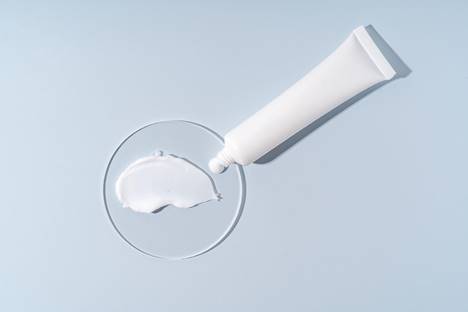
Image name : Stability Testing Service for Skincare Products with NatureProf
Guidelines for sample preparation and number of samples for testing
Planning for stability testing should begin as early as the formulation development stage. In general, it is recommended to use at least 3 production batches (3 batches) with the same composition and packaging as the final commercial product, so that the test results best reflect real manufacturing conditions.
For each test condition, there should be a sufficient number of samples to cover multiple time points, such as 0 months (initial), 1 month, 3 months, 6 months, and 12 months, including reserve samples for repeat testing if necessary.
Results should be recorded in detail – including photographs, physical characteristics, and chemical measurements – to create a “stability profile” of the formula, which then becomes an important database for improving future product versions.
Parameters for analysis
Stability testing does not assess only the external appearance; it also encompasses in-depth measurements across multiple dimensions – physical, chemical, and microbiological – to ensure that the product consistently maintains its quality.
Key parameters used in the analysis include:
● Colour, odour, texture, and phase separation of the product
● pH value, to evaluate acidity/alkalinity, which affects formula stability
● Viscosity, to assess the stability of the emulsion
● Active content, measured using techniques such as HPLC or UV–Vis spectrophotometry
● Microbial limit test, according to ISO 17516:2014
● Preservative efficacy test, according to ISO 11930
● Packaging compatibility testing, to prevent sorption, leaching, or discolouration of packaging materials
Pass criteria typically specify that pH should not change by more than ±0.5 units, viscosity should not deviate by more than 20 percent, and there should be no phase separation or abnormal odour.
Strategic benefits of stability testing for skincare businesses
1. Enhances credibility when presenting the product
Data from stability test reports can be used to support regulatory submissions to the FDA, negotiations with investors, or participation in international trade fairs.
2. Supports marketing and logistics planning
Understanding the extent to which the product can tolerate temperature or light exposure helps brands define appropriate distribution channels and packaging formats.
3. Reduces the risk of product recalls
Products that have undergone comprehensive stability testing are less likely to experience issues such as discolouration, off-odour, or premature degradation before expiry, thereby protecting the brand’s reputation in the long term.
4. Serves as a database for future development
Data obtained from testing can be analysed to identify trends, allowing brands to refine formulas or develop new products with even better stability.
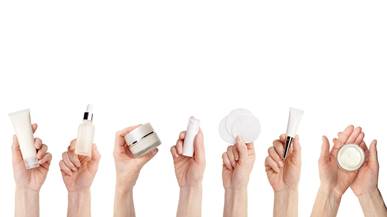
Image name : Stability Testing Service for Skincare Products with NatureProf
Conducting stability testing under both accelerated and real-time conditions, covering all possible environmental exposures, is a crucial step that allows brands to confidently verify product quality for both consumers and investors.
Brands that prioritise product stability demonstrate responsibility toward consumers and possess strong potential for international market expansion. Investment in stability testing is therefore not merely a cost, but a true investment in “brand trust.”
Contact NatureProf today
Let the expert team at NatureProf (OEM factory, ODM factory) help you evaluate the stability of your skincare products comprehensively. We are ready to provide consultation, design testing plans, and prepare reliable scientific reports to verify the quality and safety of your brand at an international level.
NatureProf – Confidence in quality, confidence in the stability of your skincare products